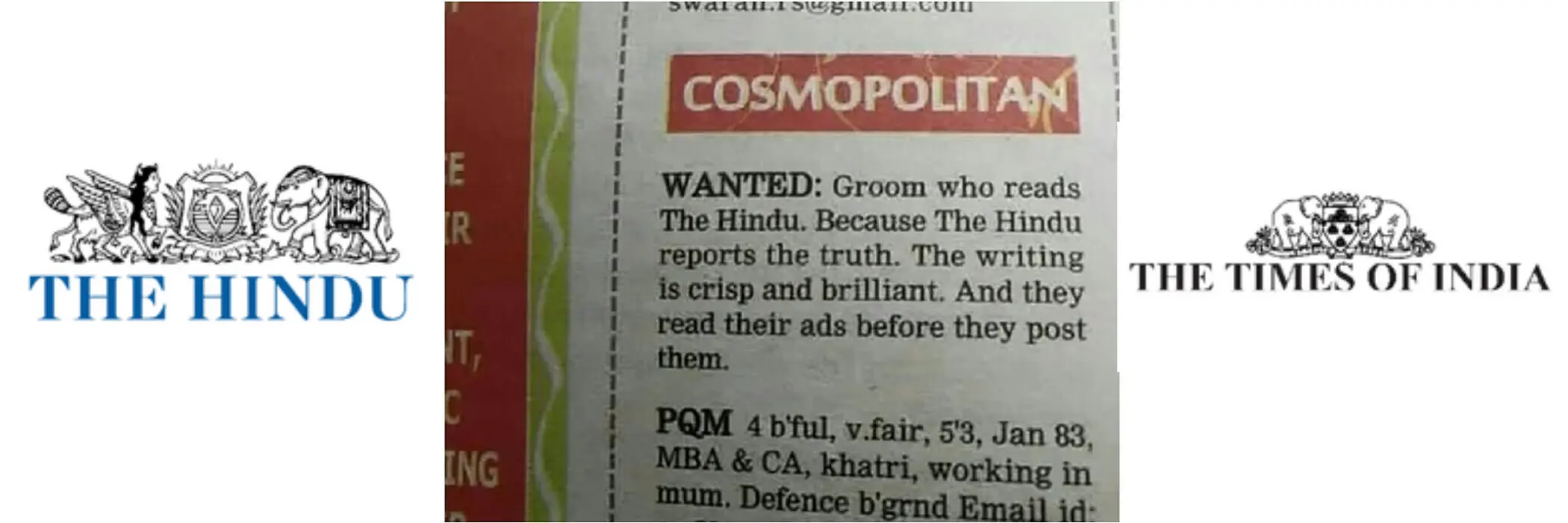
India’s two biggest English dailies spent seven years trading blows in print and on television. The Times of India called The Hindu boring. The Hindu called TOI shallow. Both were right about each other. Then, in 2015, a single matrimonial advertisement appeared in a Times Group paper that praised The Hindu so sharply it stopped the fight cold.
How the War Started
The Times of India launched its Chennai edition on April 14, 2008, walking directly into The Hindu’s strongest territory. The Hindu had dominated South Indian English readership since 1878. According to the Audit Bureau of Circulation for January to June 2011, The Hindu’s Chennai circulation stood at 356,826 copies. The TOI’s Chennai numbers were not registered with the ABC at all.
TOI arrived with an aggressive campaign in 2011 as it expanded further into Kerala. The television ads opened with slow, languid shots of mundane scenes: traffic jams, queues, a man falling asleep while holding a newspaper. A lullaby played in the background. The tagline landed at the end: “Stuck with the news that puts you to sleep? Wake up to The Times of India.” The rival was unnamed. Everyone knew who it meant.
The Hindu Woke Up
It took The Hindu three months to respond, which TOI supporters noted with satisfaction. But when it came, the counter-campaign, “Stay Ahead of the Times,” was direct and biting. TV ads showed people unable to answer basic current affairs questions who, when asked which paper they read, visibly mouthed “Times of India.” Print ads in The Hindu carried lines like “Current affairs that go beyond Bollywood affairs” and “Government malfunctions matter more than wardrobe malfunctions.” The Hindu VP Advertising Suresh Srinivasan told journalists he was “amused” by the exchange and nothing more.
TOI responded again in its Chennai edition on February 3, 2011, with copy that read: “We congratulate the competition for finally waking up to the Times of India.” BCCL CMO Rahul Kansal defended the paper’s editorial positioning as serving the middle ground, relevant to different sections of the reading public rather than only serious information seekers. The Hindu called that a circular argument. The back-and-forth continued for years, with each side scoring points that the other’s readers would never see.
The Matrimonial That Ended It
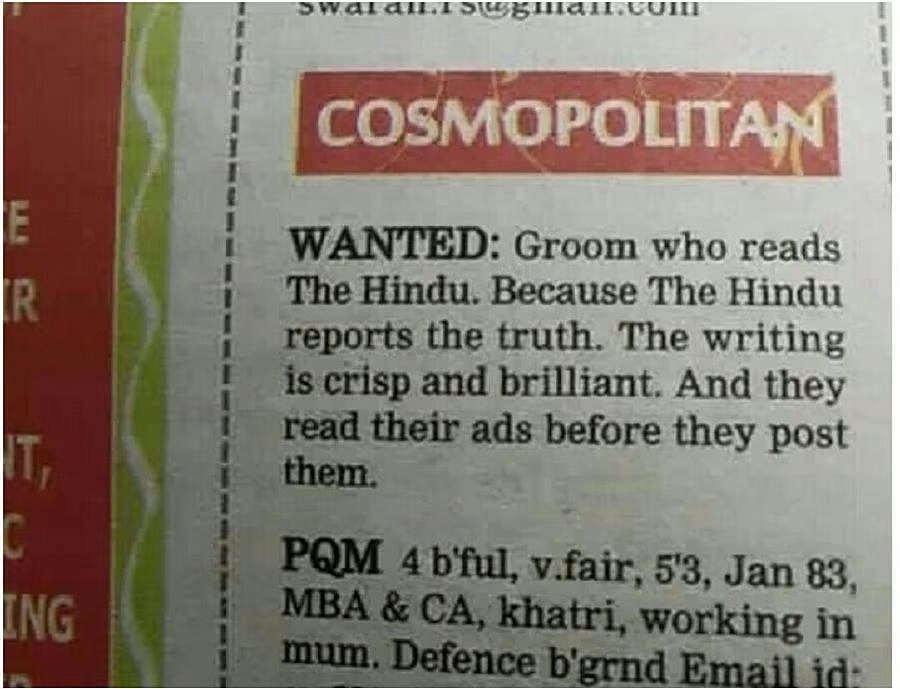
On June 7, 2015, readers of Mumbai Mirror, a sister publication of The Times of India, turned to the matrimonial section under the Cosmopolitan listings on page 39 and found this: “WANTED: Groom who reads The Hindu. Because The Hindu reports the truth. The writing is crisp and brilliant. And they read their ads before they post them.”
The final line is where the knife goes in. It simultaneously rejected The Hindu’s reputation for dullness, reinforced its credibility, and implied that TOI, the paper running the ad, does not read its own advertising before publishing it. The platform became the punchline. Mumbai Mirror had just printed an ad that made its parent group look careless.
IBN Live reported at the time that the ad had been placed by a fan of The Hindu rather than the publication’s own marketing team. The Hindu CEO, Rajiv Lochan, told BuzzFeed India he “can’t imagine” that someone from his organisation was behind it. Whether it was a genuine reader, a guerilla campaign, or something else entirely was never conclusively established. It did not matter. The effect was the same.
What Social Media Did With It
In 2015, Twitter and Facebook ran with the story immediately. Users credited The Hindu with an epic troll. Others said TOI had been burned on its own pages. The phrase “ROFL” appeared in comments across platforms with a frequency that marked the moment as genuinely viral for its era. The matrimonial page, ordinarily the most solemn section of any Indian newspaper, reserved for declarations of height, complexion, salary, and caste, had just hosted the sharpest piece of competitive advertising either paper had produced in seven years of fighting.
The ad worked because it used the competitor’s own infrastructure to land the attack. TOI could not respond without drawing more attention to the ad that had already appeared in its own family of publications. The Hindu, for its part, issued no statement claiming credit and offered only amusement. In a war where both sides had been loudly announcing their own virtues for years, silence after a perfect hit was the right call.