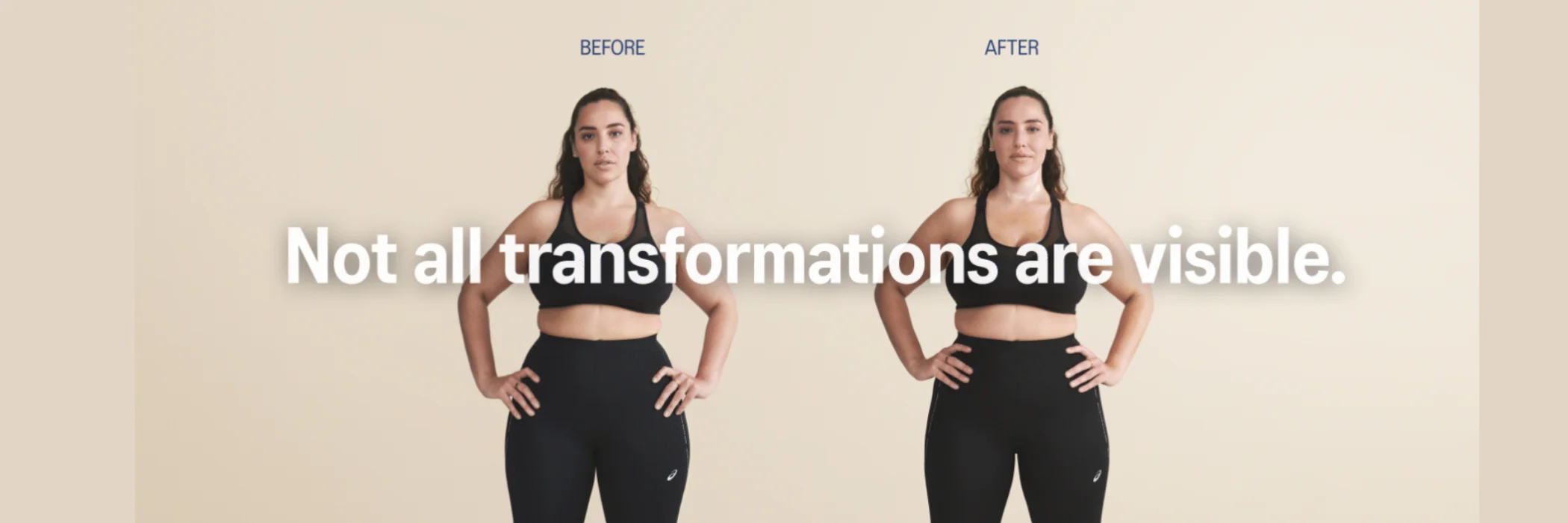
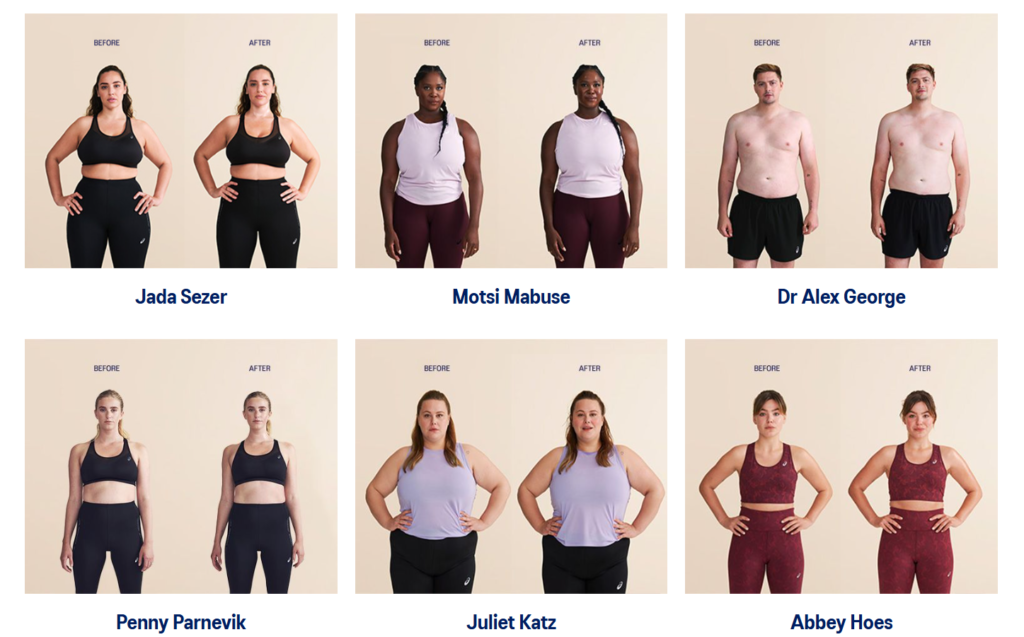
On October 6, 2022, four days before World Mental Health Day, three well-known European public figures posted their exercise transformation photographs on social media. Dr Alex George, A&E doctor and TV personality. Motsi Mabuse, professional dancer and TV host. Jada Sezer, creator and philanthropist. The before-and-after images were photographed by award-winning portrait photographer Sophie Harris-Taylor, published with the hashtag #DramaticTransformation, and captioned as a proud record of fitness progress.
The internet had questions. The two images looked almost identical. There was no weight loss. No visible muscle gain. No change in body composition. The comment sections filled immediately, with users pointing out the obvious absence of any physical transformation. Some mocked it. Others expressed confusion. Fitness forums picked it up. The absence of dramatic change became the story.
The Mechanism
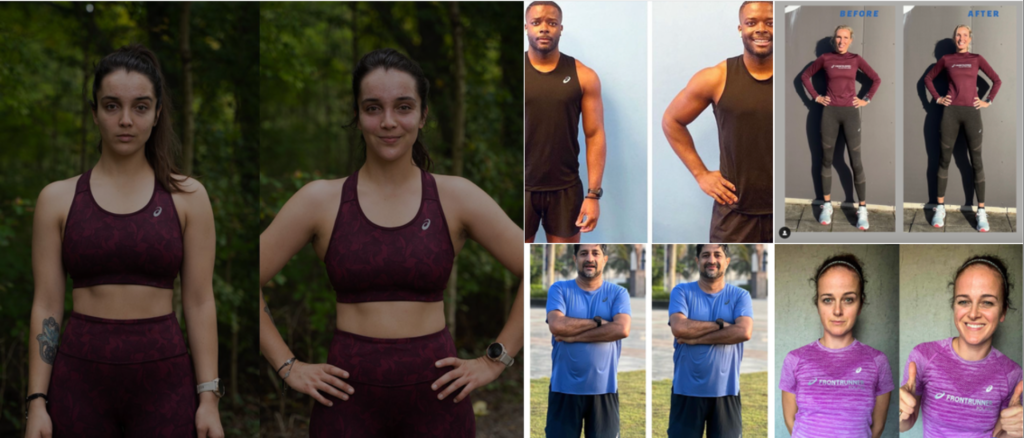
Four days later, on World Mental Health Day, ASICS and Golin revealed what the images actually showed. Sophie Harris-Taylor had photographed each subject before and after 15 minutes and 9 seconds of exercise, the specific duration of movement that ASICS research had identified as the minimum time required to produce a measurable uplift in mental state. The physical change between the two photos was negligible because it was supposed to be. The transformation in each subject’s mental state was invisible to the camera.
The campaign, supported by mental health charity Mind, ran across the UK, Germany, Sweden, and the Netherlands. Alongside the influencer content, ASICS worked with Mind representative Hayley Jarvis to conduct conversations with each ambassador about the damaging impact of body transformation imagery on mental health, and how movement had shaped their own relationship with exercise.
ASICS simultaneously pledged to remove all purely aesthetic exercise transformation imagery from its own social media channels, giving the campaign a structural commitment rather than simply a creative statement.
What Made the Execution Work
The campaign’s intelligence lies in how it used the audience’s own instinct against itself. Instagram exercise culture has trained millions of people to expect dramatic physical change in before-and-after photographs, and to dismiss images that do not deliver it. Golin used that expectation as the mechanism. The influencer images were designed to provoke exactly the criticism they received, because that criticism confirmed the campaign’s entire argument.
When users commented on the lack of visible transformation, they were, without knowing it, proving that they had internalised the idea that physical change is the only valid output of exercise. The uproar generated in those four days before the reveal became the campaign’s most powerful media asset. ASICS did not buy that response. The audience provided it for free.
The reveal on World Mental Health Day then recontextualised every piece of criticism. The mockery became an illustration of the problem. The commenters became the data point.
The Research Behind the Claim
The 15 minutes and 9 seconds figure is specific enough to carry credibility. It is not a round number chosen for memorability. It emerged from ASICS research measuring the relationship between duration of movement and mental state uplift, giving the campaign an empirical anchor that made the before-and-after conceit defensible on scientific grounds rather than purely emotional ones.
Separate ASICS research commissioned for the campaign found that 73% of Brits believe society’s obsession with the perfect body is damaging mental health. Eighty percent reported feeling demoralised after viewing standard exercise transformation images. Forty-eight percent felt worse about their bodies after seeing them. The campaign did not manufacture those numbers to support the creative idea. The numbers generated the creative idea.
The Awards and the Aftermath
The campaign was shortlisted and recognised across multiple major industry awards, including Cannes Lions 2023, where it was entered in the PR category, and the SABRE Awards. It has been cited across subsequent industry retrospectives as a landmark execution in the use of cultural provocation as a campaign mechanic.
The #DramaticTransformation hashtag, previously dominated by standard fitness transformation content, shifted in tone following the campaign as users began sharing their own mental health-focused before-and-after posts. ASICS had not just run a campaign. It had redirected an existing social media format toward a different purpose.
The Dramatic Transformations campaign remains the clearest single execution of what ASICS means when it claims that movement is about the mind as much as the body. It did not say that. It made the internet say it first, then corrected the frame.
Campaign Name: Dramatic Transformations / #DramaticTransformation
Agency Name: Golin / Photography: Sophie Harris-Taylor / Charity partner: Mind
Brand Name: ASICS
Location: United Kingdom, Germany, Sweden, Netherlands (global distribution across 20 markets)