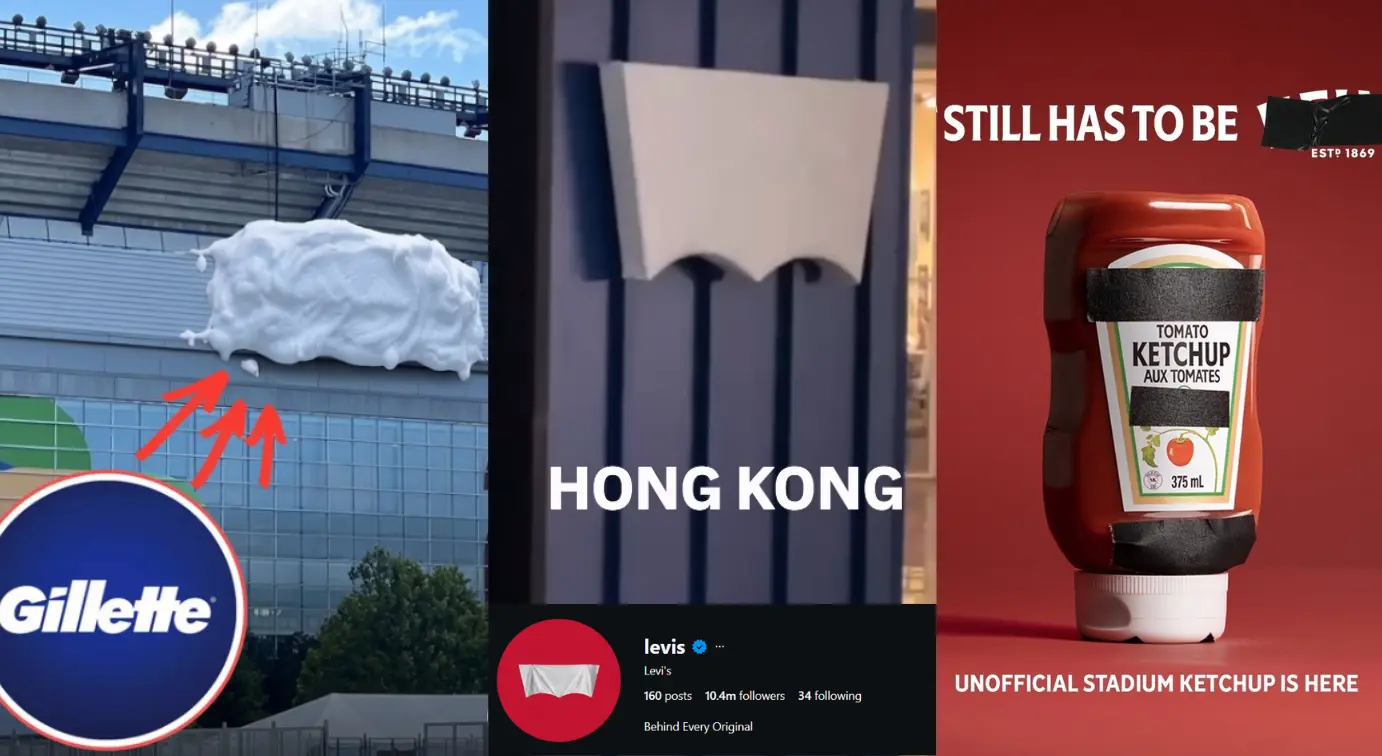
FIFA’s “clean stadium” policy has run through every match of the 2026 World Cup: no non-sponsor branding anywhere, on the pitch, in the stands, or in the press room. It is why MetLife Stadium became New York New Jersey Stadium, SoFi became Los Angeles Stadium, and Lumen Field in Seattle had its name taped over. Most brands complied quietly. A handful did not and turned the censorship itself into the campaign.
Levi’s
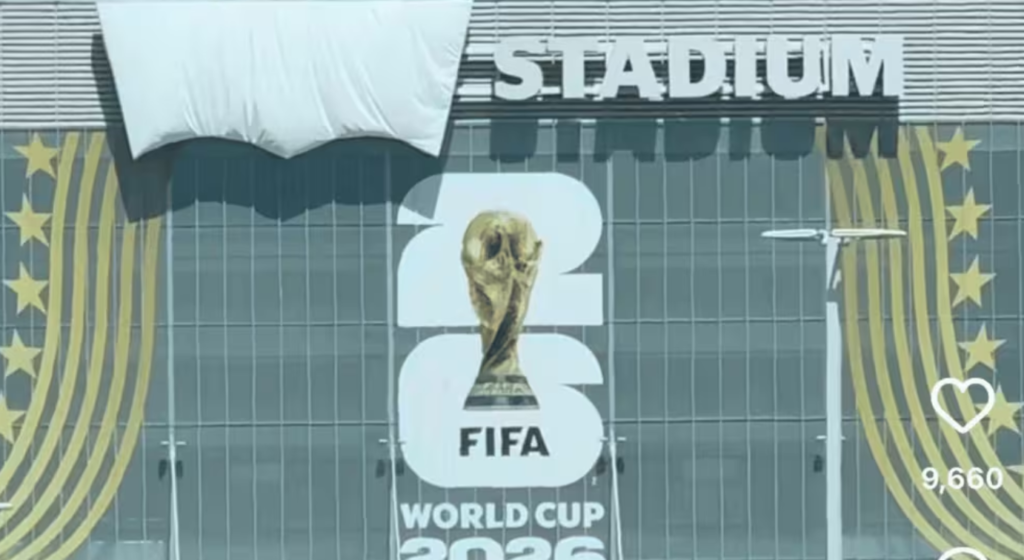
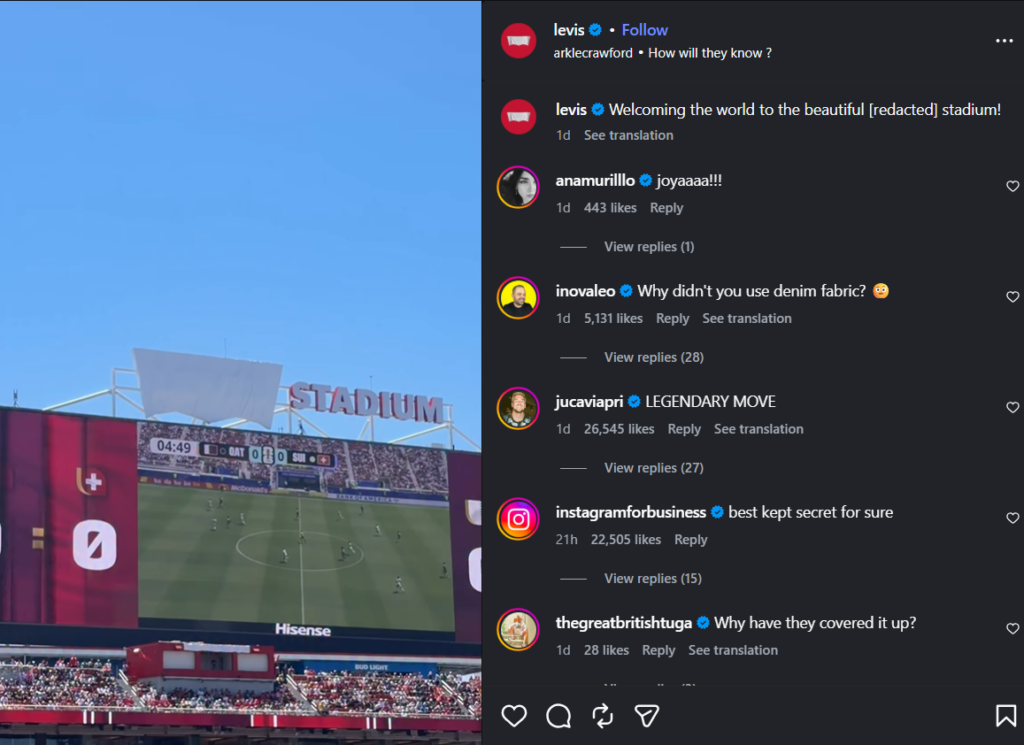
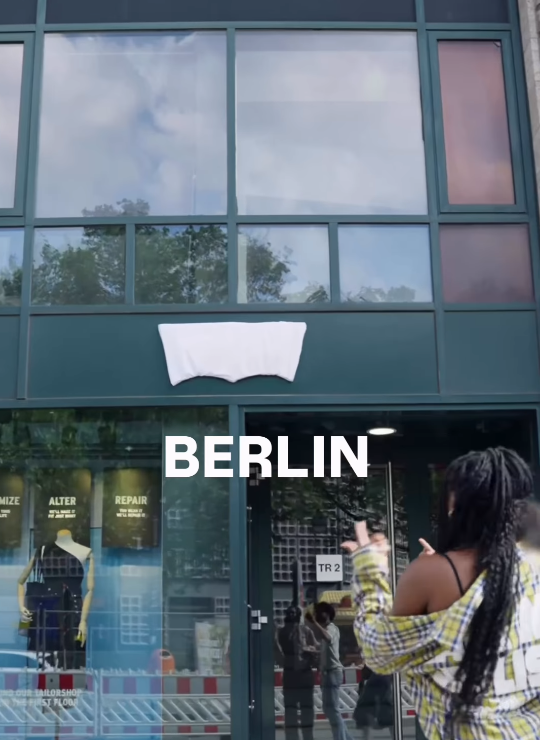
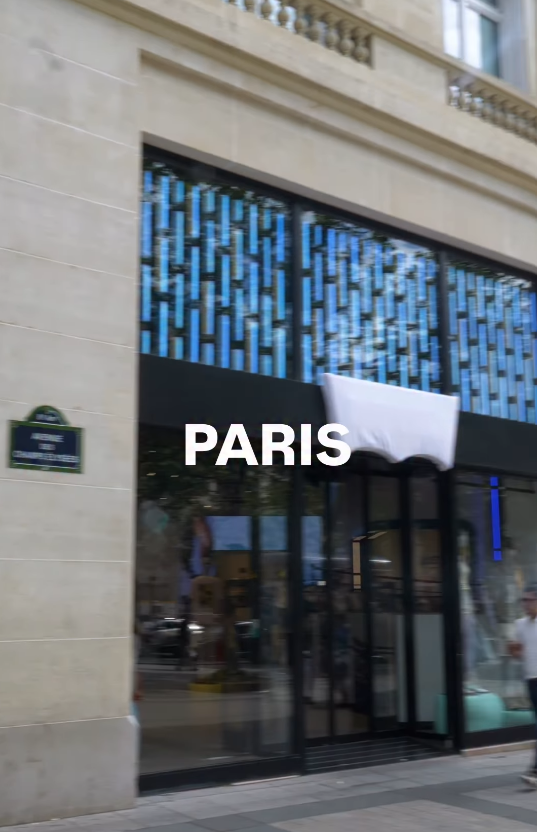
Levi’s Stadium in Santa Clara was rebranded San Francisco Bay Area Stadium for the tournament, with crews covering the iconic red Levi’s logo on the exterior with white tarp. The wordmark disappeared. The batwing silhouette, the two-arched shape that has identified Levi’s products since the 19th century, remained visible through the covering and instantly recognisable. Levi’s swapped its Instagram profile picture for an image of the tarp-covered logo, posted footage set to the viral “Nobody’s Gonna Know” audio, and captioned it “Welcoming the world to the beautiful [redacted] stadium!” The post generated tens of millions of views and was widely cited as the marketing moment of the tournament’s opening weeks.
Beats by Dre
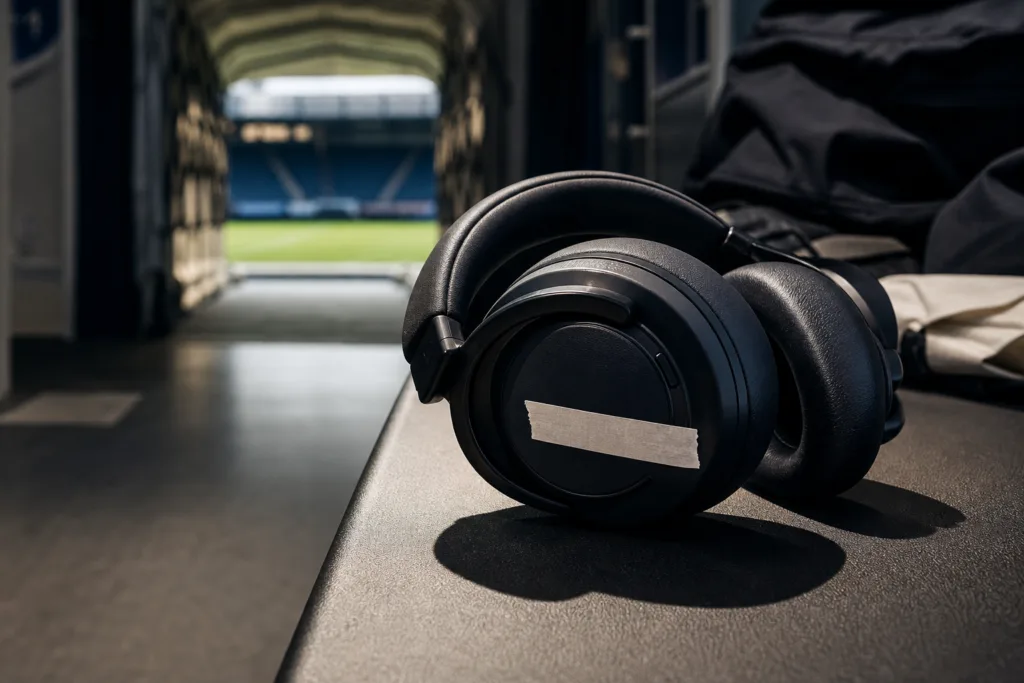
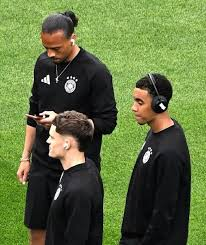
FIFA’s enforcement extended beyond stadium signage and onto players themselves. Ahead of Germany’s match against Curaçao, Bayern Munich midfielder Jamal Musiala was filmed covering the logo on his Beats by Dre headphones with a strip of tape before stepping onto the pitch, at FIFA’s direct request, since Beats is not an official tournament sponsor. The clip went viral within hours. Beats, owned by Apple, leaned straight into it, swapping its own Instagram profile picture for a piece of white tape covering its logo to match the headphones Musiala had been filmed wearing. The brand had also been sending footballers unreleased prototype headphones to wear pre-match throughout the tournament, meaning the tape moment doubled as cover for a product Beats had not yet officially announced.
Heinz
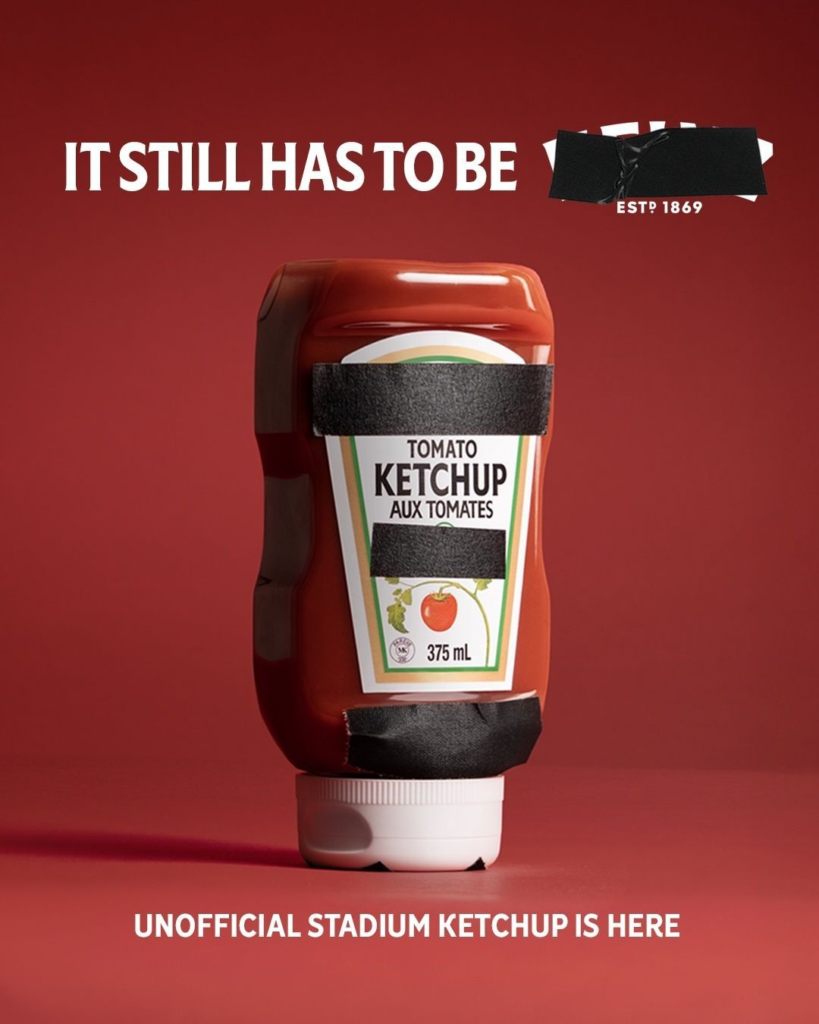
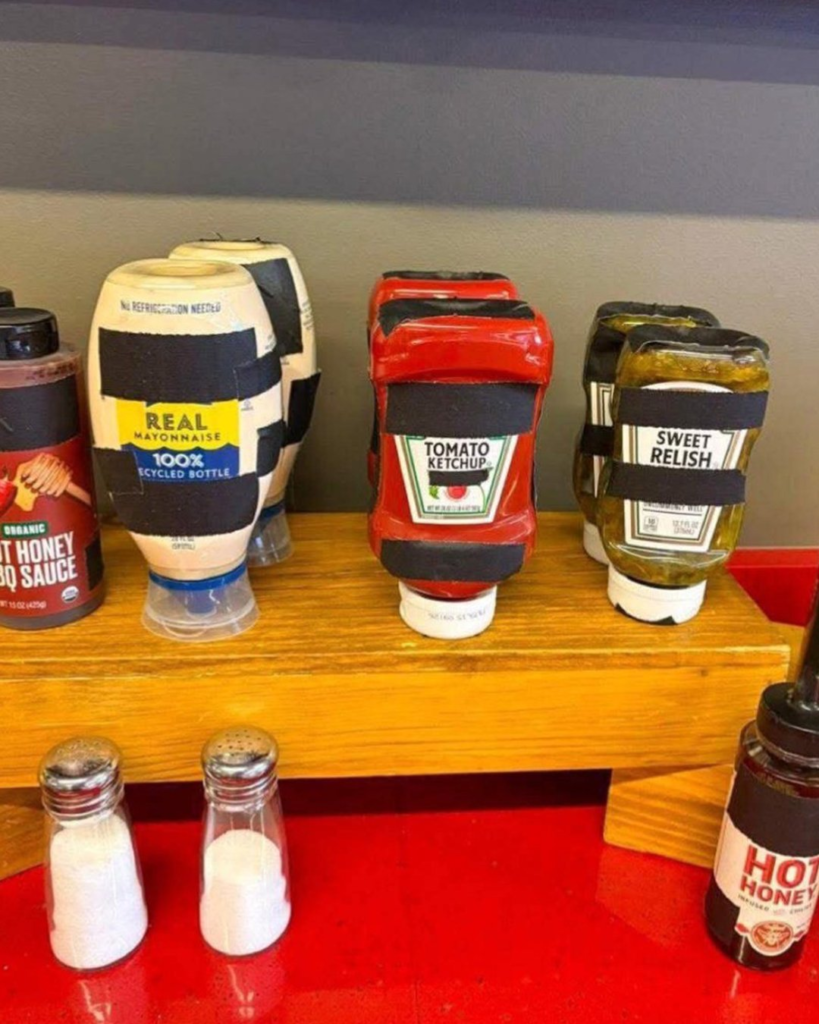
FIFA’s brand protection team went as far as taping over Heinz labels on ketchup bottles inside stadium press rooms and restaurants, removing any visible non-sponsor branding from condiments served to journalists and staff. Heinz responded with its own black tape, applied to bottles bearing a new label that read “UNOFFICIAL STADIUM KETCHUP IS HERE.” The stunt converted a minor and slightly absurd enforcement action, taping over a ketchup label, into a self-aware joke that travelled well beyond the press room it originated in.
Gillette
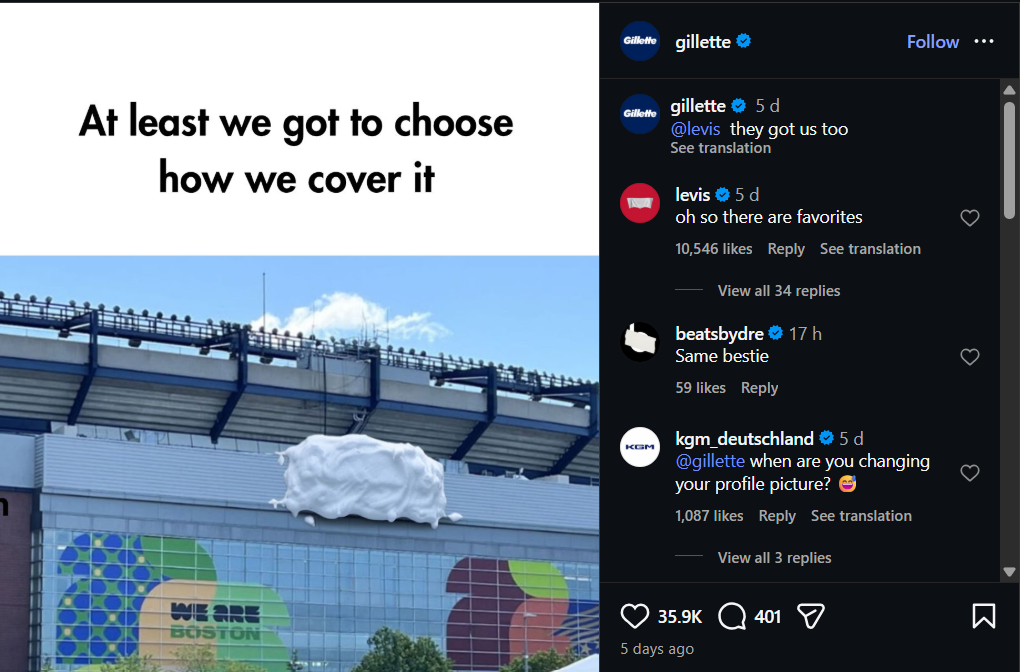
Gillette Stadium in Foxborough, home of the New England Patriots and several World Cup matches, presented FIFA’s brand protection team with its most labour-intensive job of the tournament. Beyond covering the exterior signage, crews applied nearly 65,000 individual strips of tape to conceal the small Gillette branding printed on every seat across the stadium. Gillette’s response matched the absurdity of its own removal: the brand posted a playful execution showing shaving cream covering part of its own stadium logo, tagged “They got us too,” directly referencing the same censorship moment Levi’s had already turned into a viral campaign. A razor brand making a joke about being shaved off the building it pays to put its name on required no further explanation.
The Tactic Is Not New
What Levi’s, Beats, Heinz, and Gillette did in 2026 is the same mechanic Nike used at the 2012 London Olympics, executed without spending a cent on official sponsorship. Adidas had paid an estimated £100 million to become the Official Sportswear Partner of the London Games, securing exclusive rights to use phrases like “London Olympics” and “London 2012.” Nike was not a sponsor and had no rights to use the word London in any Olympics-adjacent context.
Nike’s solution was its “Find Your Greatness” campaign, filmed entirely in places around the world that happened to be named London: London, Ohio; Little London, Jamaica; East London, South Africa; even a health club called London Gym. The ads never mentioned the London Olympics directly, which meant Nike technically broke no sponsorship rules, while the message landed with total clarity to anyone watching. The campaign, created by Wieden+Kennedy Portland, generated over 16,000 Olympics-linked tweets for Nike compared to Adidas’s 9,000, and a Forbes-cited survey of 7,200 people across multiple countries found that 60% believed Nike was the official Olympic sponsor. It was not.
The Pattern
Cover a logo people already know by heart, and you do not hide it. You frame it. Every brand on this list understood that the restriction itself, applied publicly and at scale, generates more attention than a compliant absence ever could. FIFA’s rulebook protects its paying sponsors from unauthorised association. It cannot protect those same sponsors from being upstaged by the brands its own rules forced into the spotlight.