China’s 15th National Games ran from November 9 to 21, 2025, across Guangdong, Hong Kong, and Macao. Heinz had no official sponsorship. No logo on the courts. No broadcast tie in. No athlete contracts. What it had was a tomato, a sharp, creative observation, and 34 characters that turned the entire event into a Heinz moment.
The Idea That Started With a Leaf
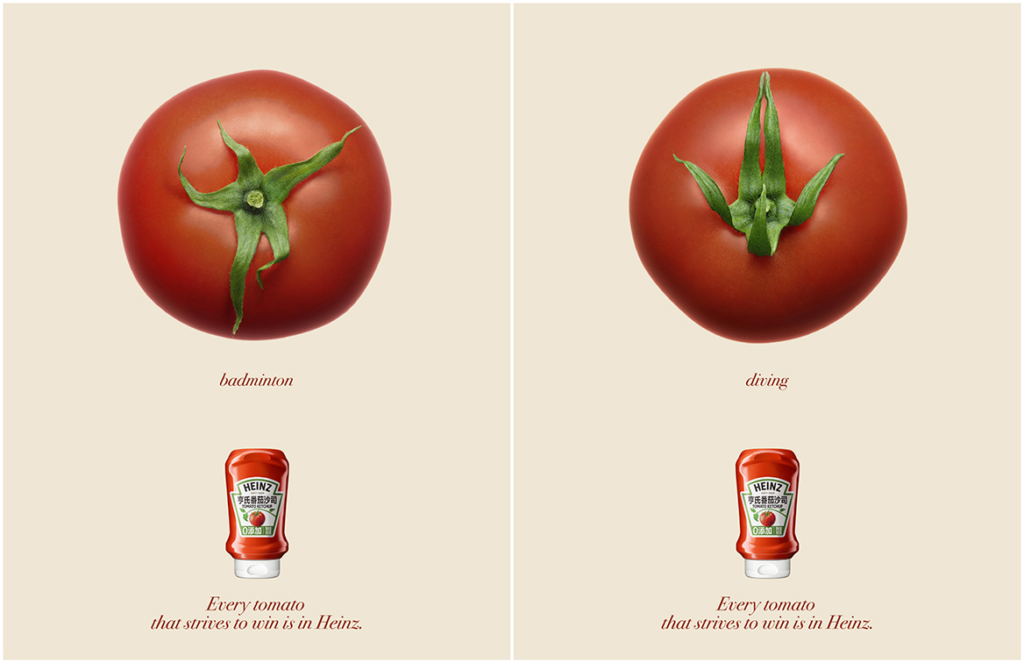
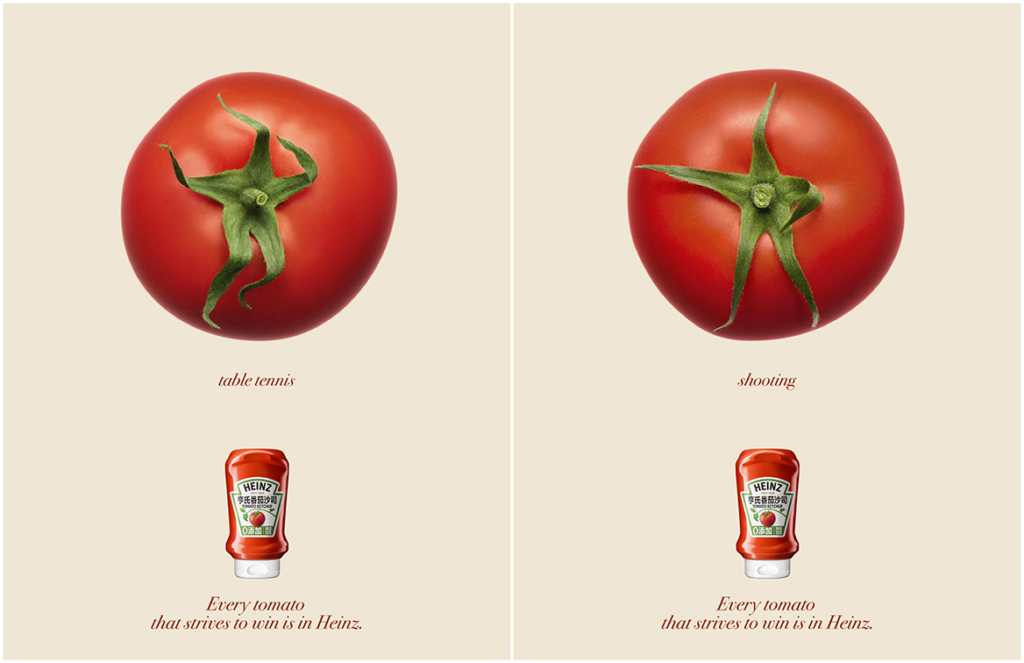
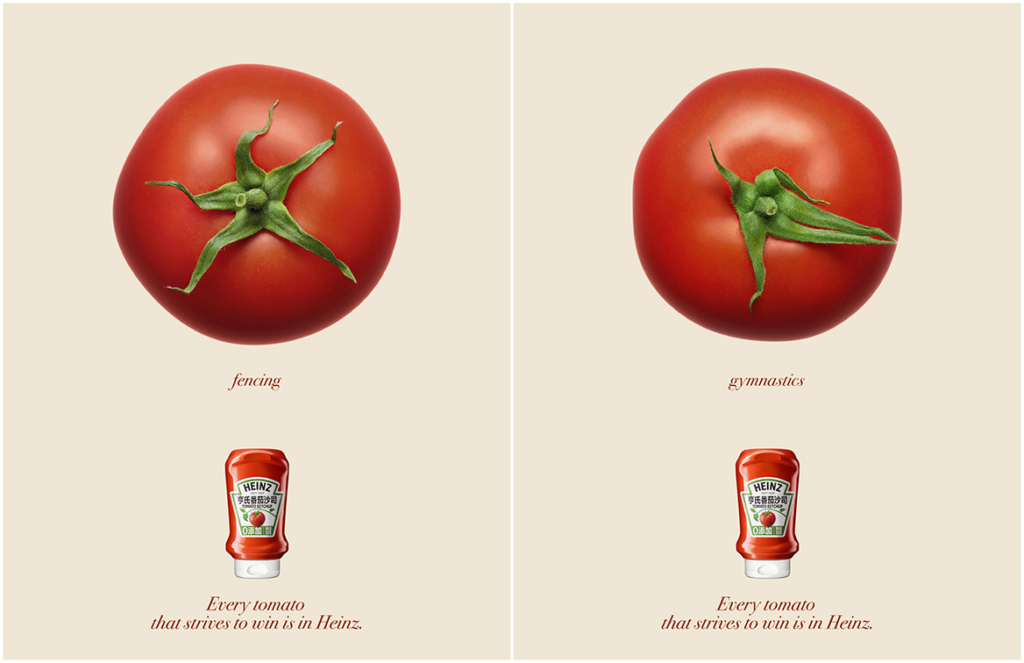
Heaven & Hell Shanghai noticed something that had been sitting in plain sight for decades. The five leaflets at the top of a tomato, when arranged correctly, resemble a human body in motion. Arms extended. Legs bent. A torso implicit in the stem. The visual connection between tomato and athlete is not a stretch. It is literally there in the produce.
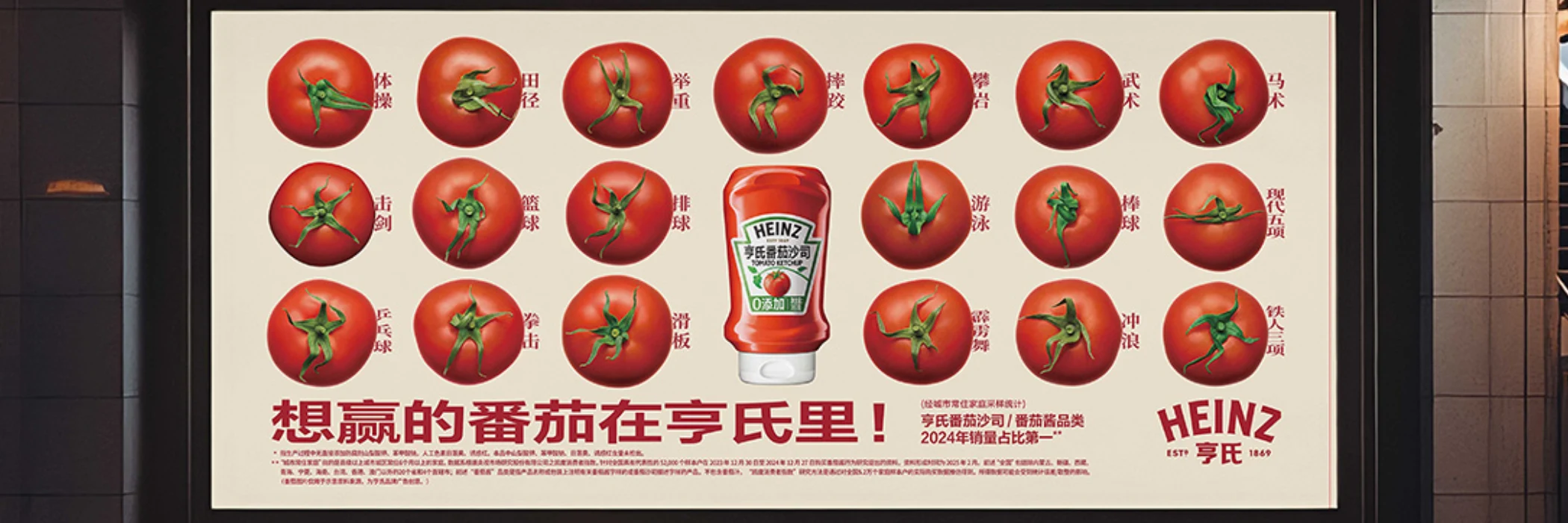
From that single observation, the agency built 34 distinct tomato characters, one for each sport featured at the National Games. Each was built using the tomato’s leaflets, bent and twisted to capture the specific movement of its sport. A rhythmic gymnast in mid ribbon throw. A basketball player at the peak of a jump shot. A judoka mid-throw. A weightlifter is locked under a bar. A breakdancer mid spin. The characters were rendered in CGI by Bangkok-based studio Illusion, which added personality, energy, and fine anatomical detail to each tomato form.
The line that tied all 34 together was “Every tomato that strives to win is in Heinz.” It connects the brand’s core quality claim, that Heinz only uses carefully selected, premium tomatoes, directly to the spirit of elite athletic competition. The parallel is clean. Both athletes and tomatoes are selected for performance. Both are measured against a standard. Both have to earn their place.
Where It Ran
The campaign launched on November 9, timed precisely to the Games’ opening ceremony, and ran through November 21. Media placement concentrated on Guangdong, the primary host region, with high-speed rail stations, subway screens, and elevator panels selected for maximum commuter and transit visibility. The campaign also ran across Xiaohongshu, China’s primary lifestyle and discovery platform, which is optimised for shareable visual content and organic spreading.
The 34 characters gave the campaign a natural shareability architecture. Each sport had its own tomato. Sports fans could find their discipline in the set, share it, and tag athletes or friends who competed in that event. The content spread without requiring paid amplification beyond the initial placement.
The Non-Sponsor Playbook
Heinz is not new to entering cultural moments from outside the official sponsor category. The brand has a documented history of ambient and reactive campaigns that position it inside conversations it has not paid to own. The China National Games campaign follows that same structural logic.
Official Games sponsorships in China carry significant investment. They also come with visibility restrictions, message approval frameworks, and placement constraints that can limit creative flexibility. Heinz and Heaven & Hell Shanghai operated entirely outside those constraints. The brand could use any creative approach it chose, place it anywhere it wanted, and say whatever it wanted, because it had no official relationship with the Games to protect.
The campaign is not ambush marketing in the aggressive sense. It does not mimic official branding or create confusion about sponsorship status. It simply uses the cultural energy of the moment, the national focus on sport and competition, as context for a product message that happens to be structurally compatible with that energy.
What It Achieved
The campaign picked up coverage across Campaign Brief Asia, Creative Moment, RADII, and multiple regional advertising publications within days of launch. The 34 character system gave media and social platforms a reason to engage with the work beyond a single visual, as each character functioned as individual shareable content.
The tomato athlete characters quickly became a symbol of support for the real Games competitors within Guangdong social media communities, with users sharing their sport’s character alongside commentary on actual events. The brand had created mascots for an event it did not sponsor, and the event’s own audience distributed them.
Campaign Name: Not mentioned
Agency Name: Heaven & Hell Shanghai
Brand Name: Heinz (Kraft Heinz)
Location: Guangdong, Hong Kong, Macao, China