
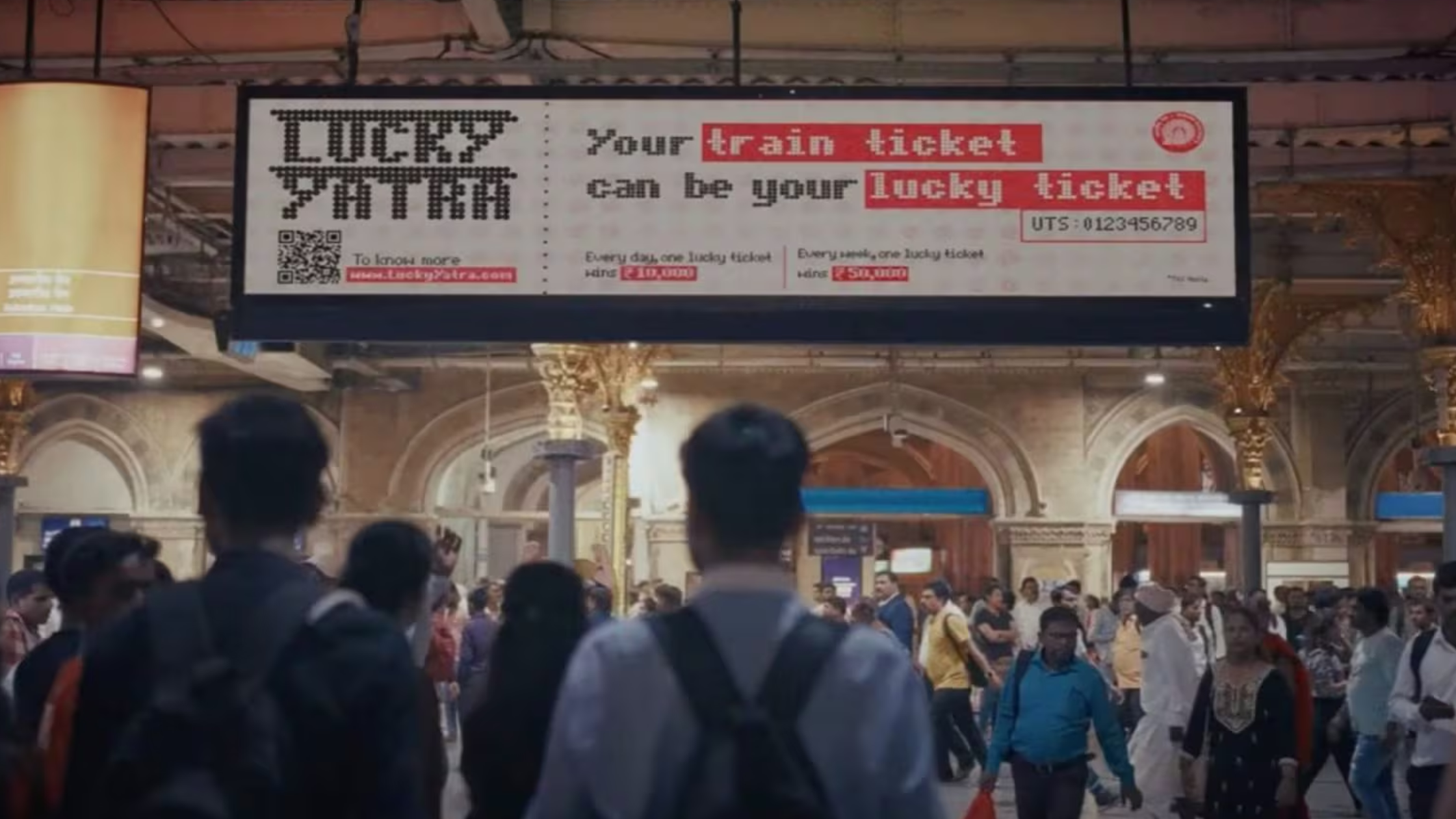
The Mumbai suburban rail network serves over seven million passengers daily across an expansive transit grid. Managing this massive flow of human traffic presents significant logistical hurdles. Approximately 20 percent of commuters routinely skip purchasing daily fares. This widespread fare evasion costs the public transit system hundreds of millions of dollars in yearly financial losses. Standard enforcement measures rely heavily on ticket inspectors and financial penalties. These traditional policing methods repeatedly failed to curb the behaviour at scale due to the sheer volume of travellers moving through the stations.
The Mumbai Division of Central Railway and FCB India launched a behavioural change initiative to solve this structural financial drain. The strategy ignores traditional advertising models that focus on selling a physical product. The campaign instead solves a real world logistical problem by leveraging human psychology. Research showed that India spends over 30 billion dollars annually on lottery tickets and games of chance. The railways tapped into this national fascination with luck. They linked the natural human hope of winning a jackpot with civic integrity.
This approach completely shifted the transit strategy from policing fare evasion to rewarding legitimate ticket purchases. The initiative incentivises honest behaviour without actively punishing the passengers who avoid fares. The physical execution relies on the unique, unreserved ticketing system number printed directly on every standard train ticket. Purchasing a regular journey fare automatically enters the commuter into a randomised draw. Commuters do not need to fill out extra promotional forms or pay additional participation fees.
The system selects winners on a daily and weekly schedule to maintain constant commuter interest. One lucky passenger wins 10,000 rupees every single day. Another commuter wins a bumper grand prize of 50,000 rupees every week. Ticket inspectors conduct randomised verifications directly on the railway platforms and inside the train cars. Passengers holding valid printed or digital tickets can claim their cash reward immediately upon verification.
The media rollout targeted millions of daily commuters directly at the transit hubs. The strategy utilized high visibility contextual out of home placements and digital screens stationed next to ticketing counters. Radio Mirchi joined as the official broadcast partner to amplify the message across the city. The campaign also hijacked the existing public address infrastructure within the transit network. Live audio announcements echoed inside the trains and across the platforms. The standard railway departure phrase was transformed into “Shubh Yatra Sorry Sorry Lucky Yatra” to constantly reinforce the financial incentive to a captive audience.
The execution created an immediate mutual benefit for all involved parties. Commuters gained a daily opportunity to win substantial cash prizes for a minimal routine purchase. The Indian Railways recovered crucial operating funds and changed public perception by fostering goodwill rather than resentment. FCB India demonstrated the power of creative commerce and secured major global recognition. In 2025, the campaign won a Gold Lion and a Bronze Lion in the Outdoor category, along with the PR Grand Prix at the Cannes Lions festival.
Campaign Name Lucky Yatra
Agency Name FCB India
Brand Name Indian Railways
Location: Mumbai