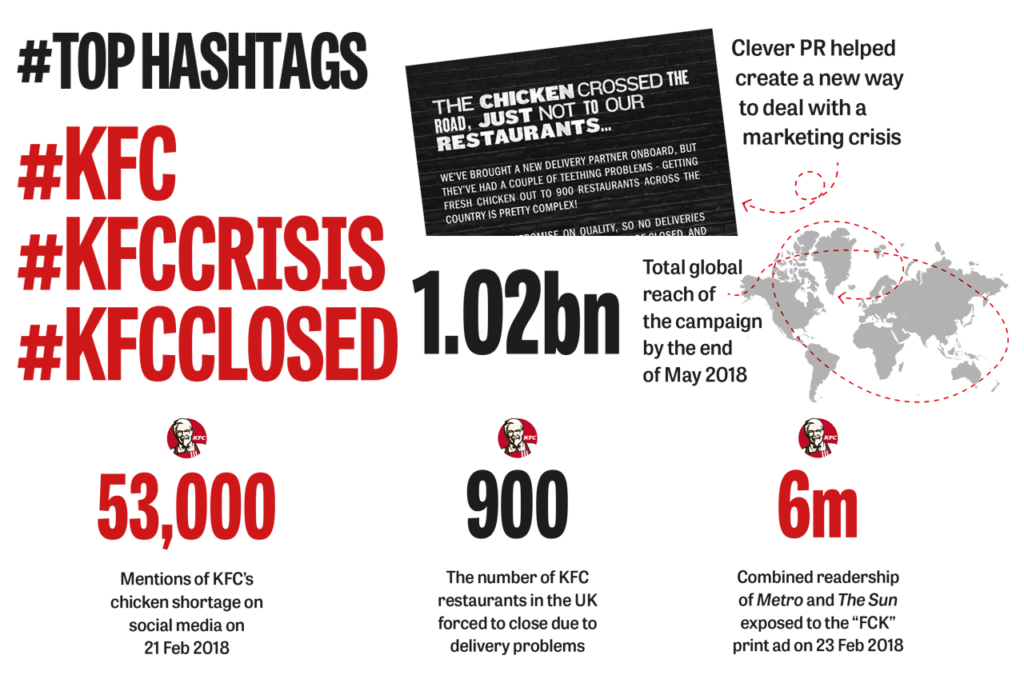
In February 2018, KFC ran out of chicken in the United Kingdom. Not at one location. At 900 of them. The chain that built its entire identity around fried chicken could not serve fried chicken, and the story was running on global news outlets. The Metropolitan Police in Tower Hamlets had to post a public tweet reminding London residents that the shortage was, in fact, not a police matter. KFC was in the middle of its worst crisis since entering the UK market. Mother London had been its agency for eleven months.
How the Crisis Started
The origins trace back to October 2017. KFC ended a long-standing supply arrangement with Bidvest Logistics and signed a new contract with DHL and Quick Service Logistics. The announcement came with considerable fanfare. KFC and DHL jointly described the move as a plan to “revolutionise” the UK food-service supply chain with an unprecedented focus on innovation, quality, and reliability.
DHL operates primarily as a home delivery company. Managing just-in-time food logistics for hundreds of fast food restaurants across the United Kingdom from a single operations centre in Rugby was a different operational proposition. Within weeks of taking over, the system was failing. By February 16, restaurants were running out of key ingredients, including chicken. By the following week, hundreds had shut completely.
On February 21 alone, Brandwatch recorded 53,000 social media mentions of KFC running out of chicken. Hashtags including #ChickenCrisis and #KFCCrisis were running globally. Meghan Farren, KFC’s chief marketing officer for the UK and Ireland, described the situation plainly: “At the time, our business was, to be honest, on its knees.”
The Three-Letter Response
Mother London had two objectives: apologise at scale and explain what was being done to fix it. The standard crisis management approach, an executive statement on television, a press release, a carefully worded apology that blamed no one and said very little, was exactly what a UK public familiar with empty corporate contrition would have dismissed without reading.
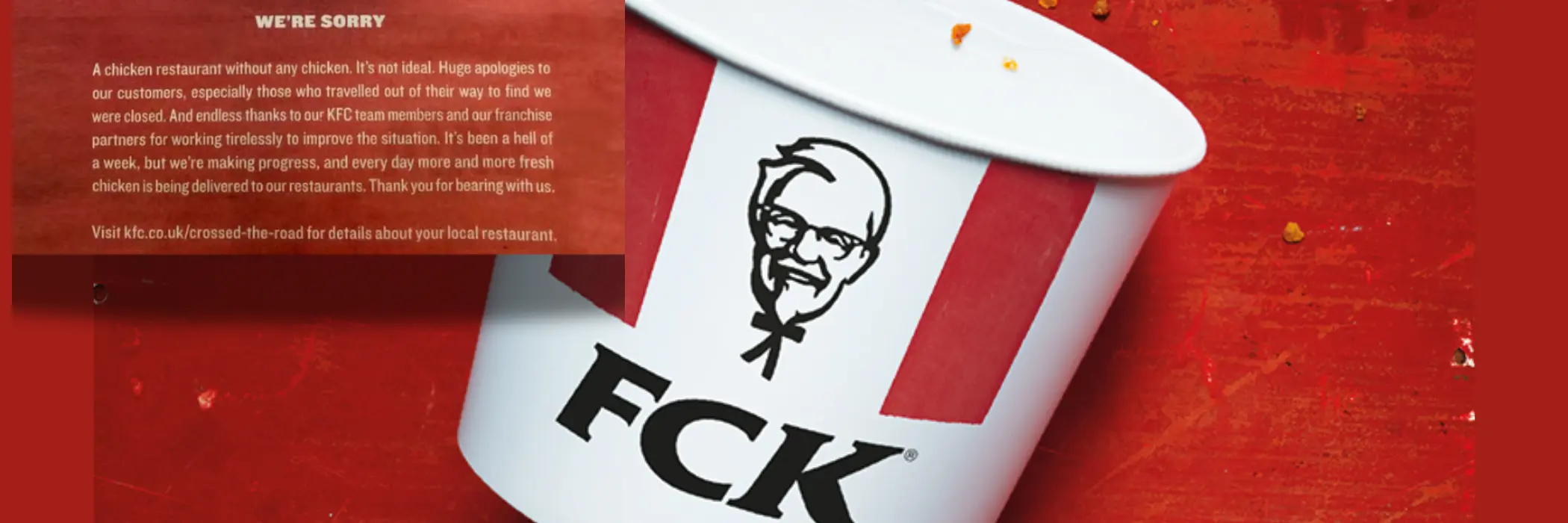
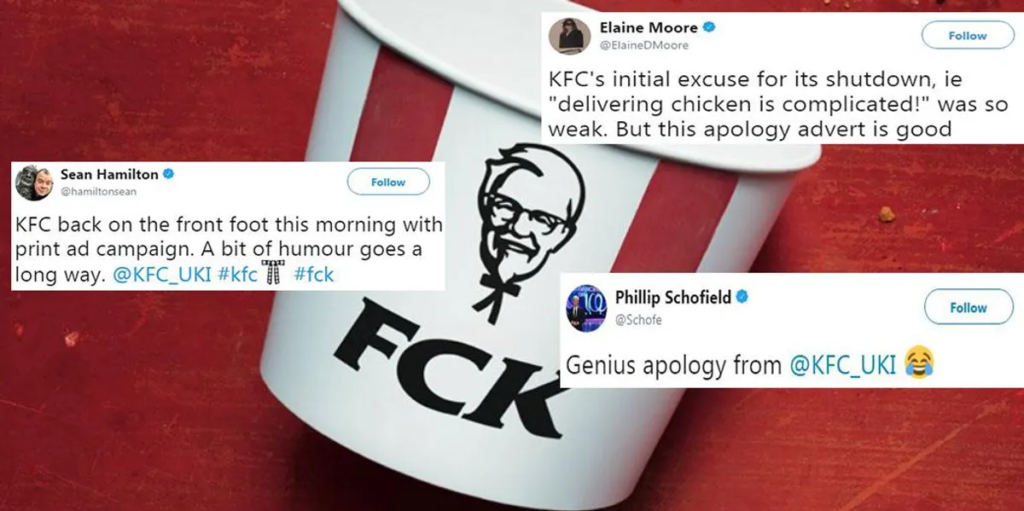
The agency built its response around three principles: humility, humour, and honesty. All three were already present in one three-letter word. Mother rearranged KFC’s initials to spell “FCK,” printed them on the front of a KFC bucket, ran the ad as a full page in The Sun and Metro with a combined readership of nearly six million, and followed it with a frank, unscripted explanation of what had gone wrong, written in plain English with a direct address to the customers and franchise owners who had been affected.
The ad was not cleared for broadcast. It was not intended to be. Print was the deliberate medium choice, selected because Mother and media agency Blue 449 assessed it as carrying higher trust metrics than social media in the context of a formal public apology, and because 71% of the UK population visits KFC at least once a year, meaning the readership of The Sun and Metro mapped almost exactly onto the audience that needed to see the message.
What It Generated
Within three days of publication, the ad had generated over 900 articles and 8.6 million impressions on Twitter. It ran without paid amplification on social media. Customers and journalists shared it organically because it said what corporate apologies rarely say: this was a genuine operational failure, we are sorry, and here is exactly how it happened.
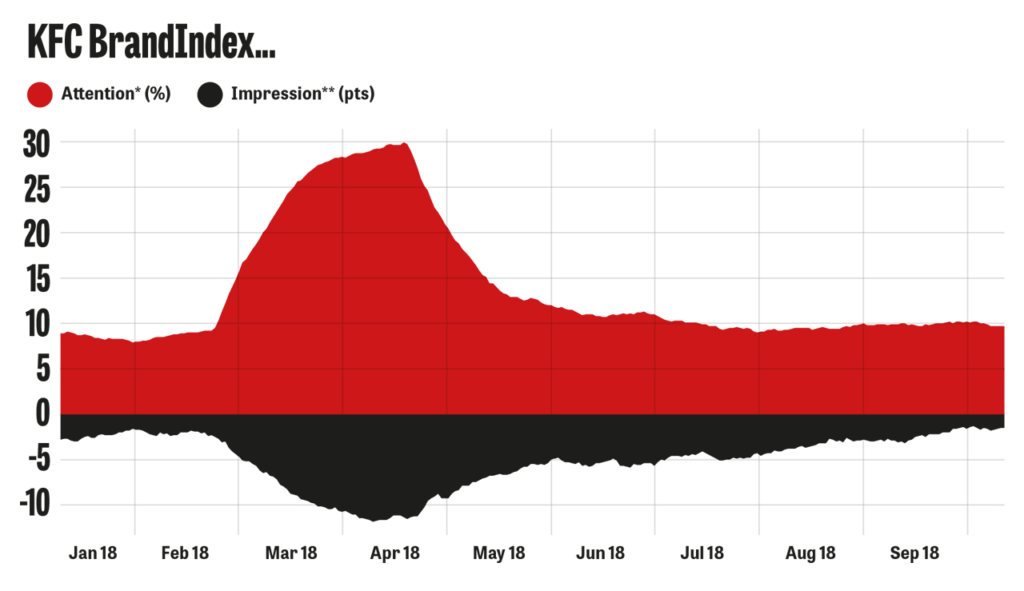
YouGov BrandIndex recorded a 9% increase in KFC brand sentiment in the week following the campaign. The brand’s impression score, which had dropped sharply during the crisis, recovered to pre-crisis levels within four weeks. The apology did not just manage the reputational damage. It reversed it.
The campaign won the Cannes Lions Grand Prix in the Print and Publishing category, a Gold IPA Effectiveness Award, and multiple Creative Circle Gold Pencils. It has since been cited as the definitive modern case study in crisis communication, taught across business schools and marketing programmes globally.
Why It Worked and Cannot Be Easily Replicated
The “FCK” ad worked because it was the correct response to that specific crisis, not a template. It worked because the problem was genuinely KFC’s fault, and the ad did not pretend otherwise. It worked because the humour was appropriate to the brand’s existing tone and the audience’s relationship with it. And it worked because it arrived fast. The window for a crisis response to land as authentic rather than managed is narrow. Mother London moved inside it.
The broader lesson the campaign offers is not that brands in crisis should be funny. It is that the decision to be honest in a crisis, structurally honest rather than performatively apologetic, requires the same creative courage that any strong advertising does. Finding that in the brand’s own name, rearranged, on the product that had run out, is the specific genius that makes the “FCK” ad irreplaceable rather than instructive.
Campaign Name: “FCK”
Agency Name: Mother London / Media: Blue 449
Brand Name: KFC UK and Ireland
Location: United Kingdom