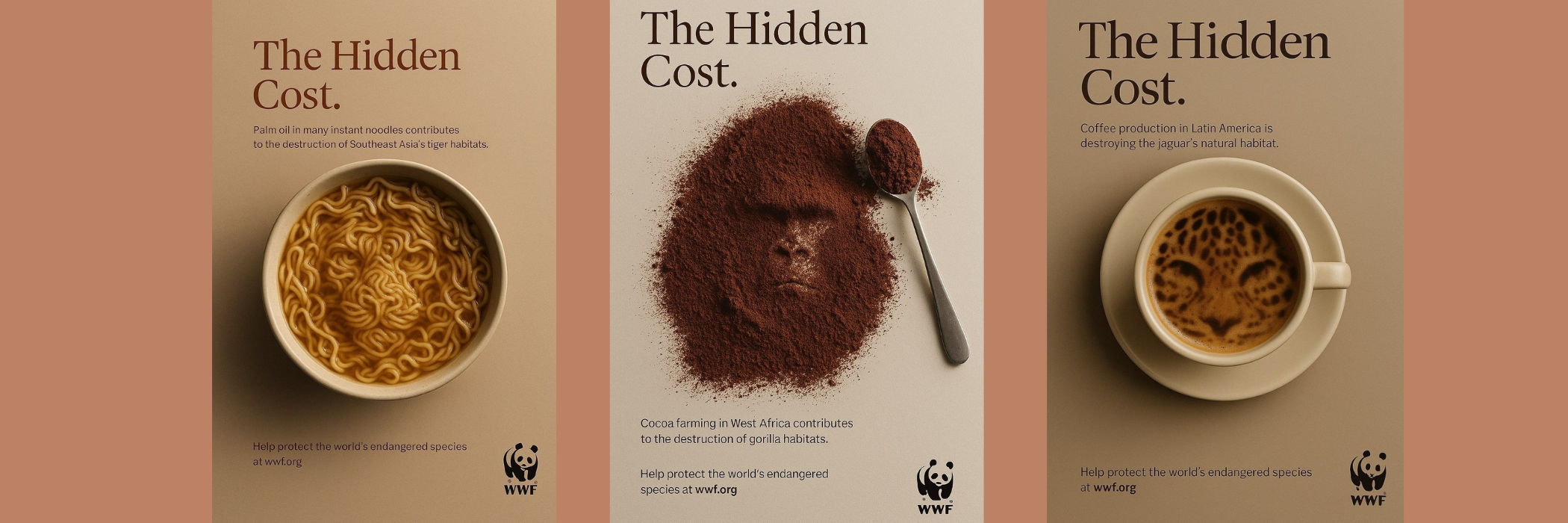
One developer. One AI tool. Eleven ads for WWF Denmark, produced entirely inside ChatGPT, from concept to final visual, without a photographer, art director, retoucher, or external design software involved at any stage. The campaign went viral on LinkedIn within 48 hours. WWF Denmark showcased it on their own channel. The advertising industry spent the week debating what it meant.
The Idea
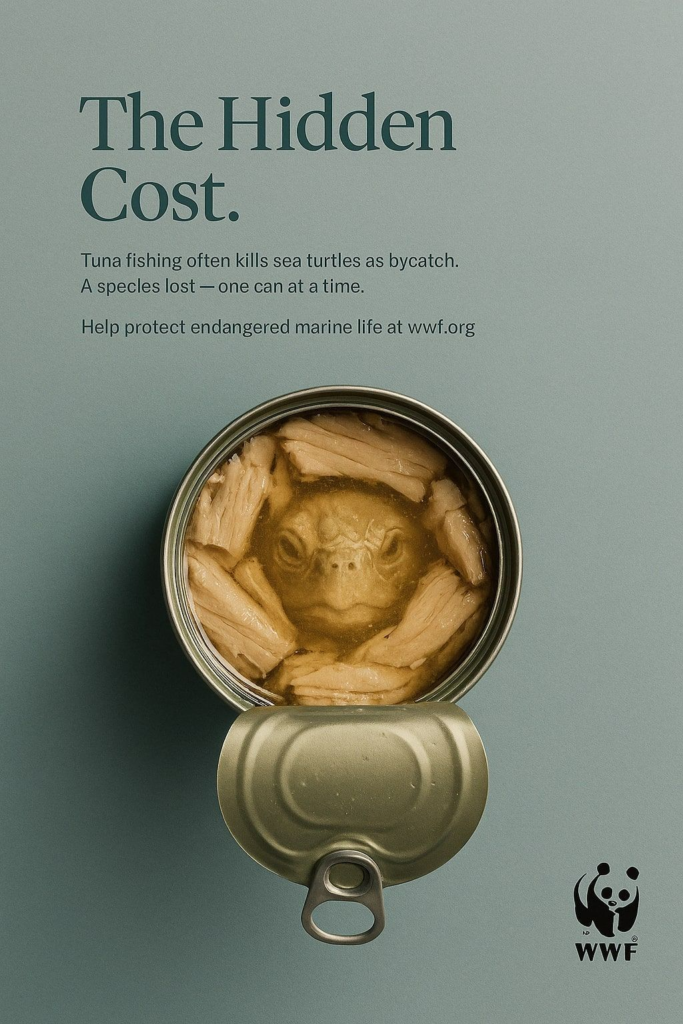
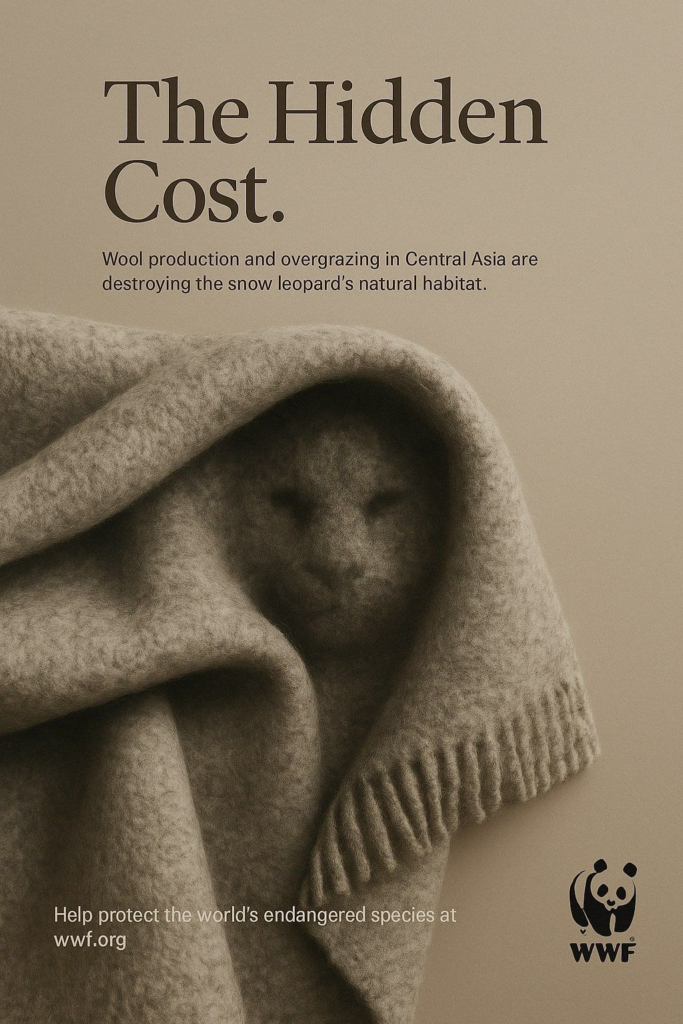
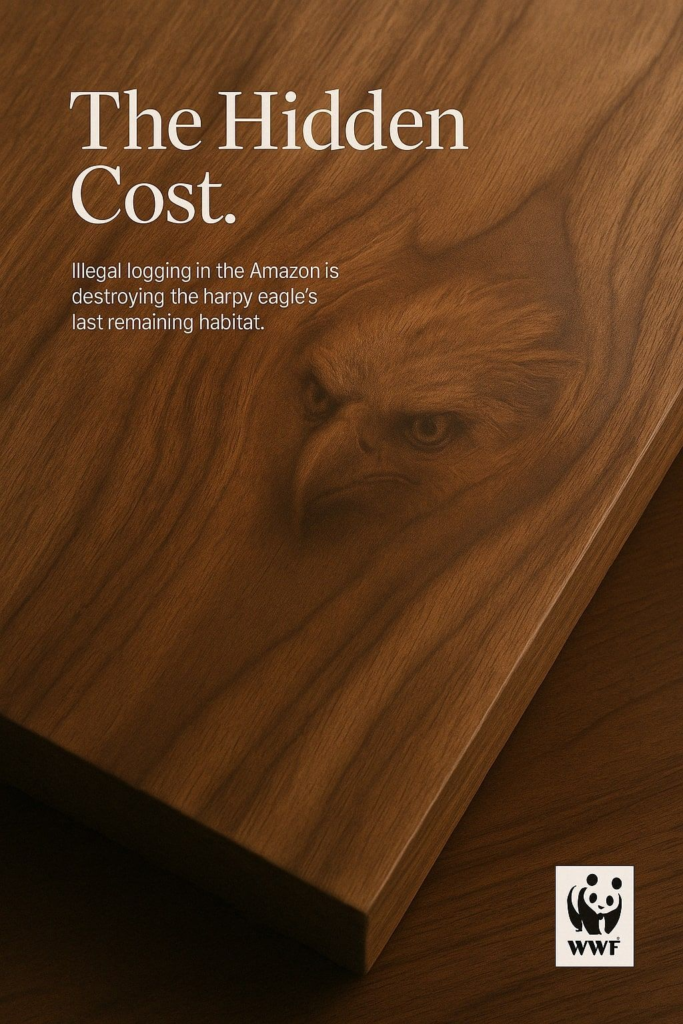

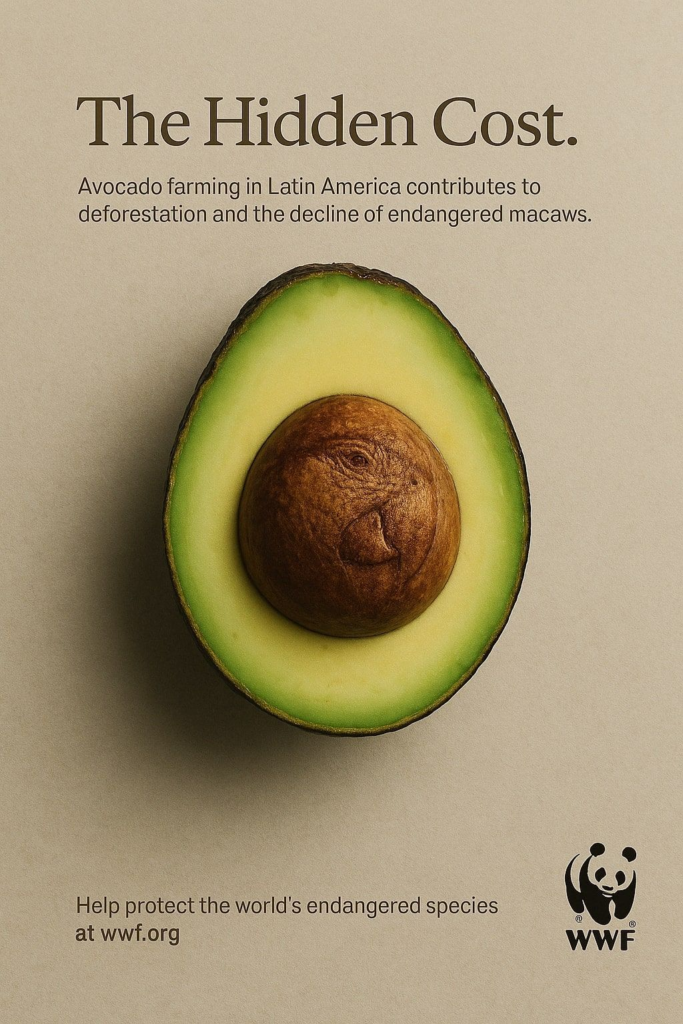
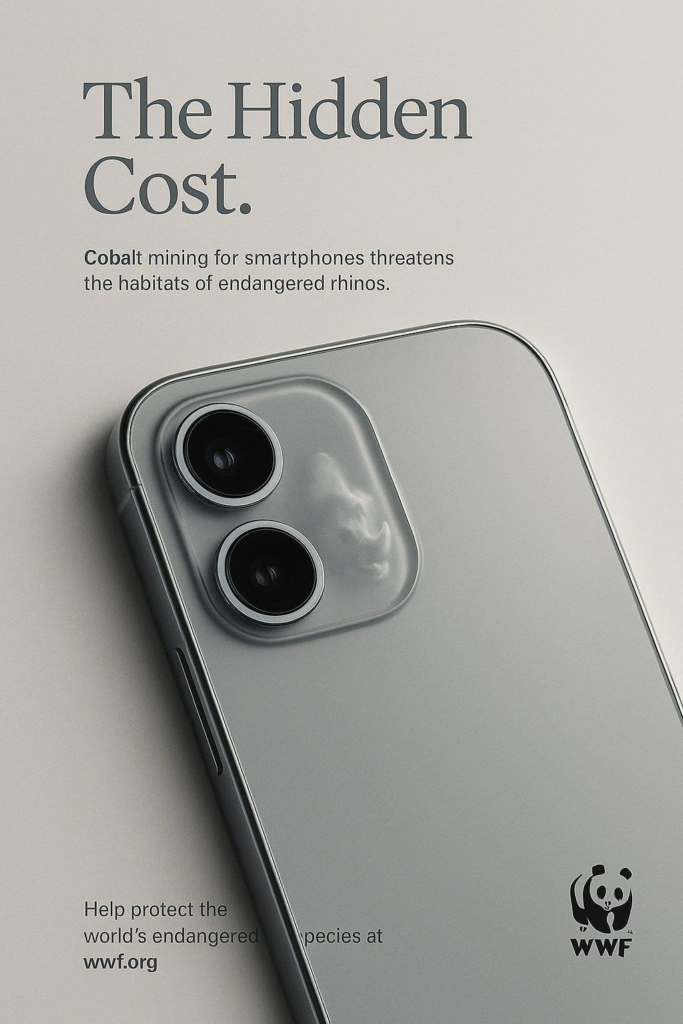
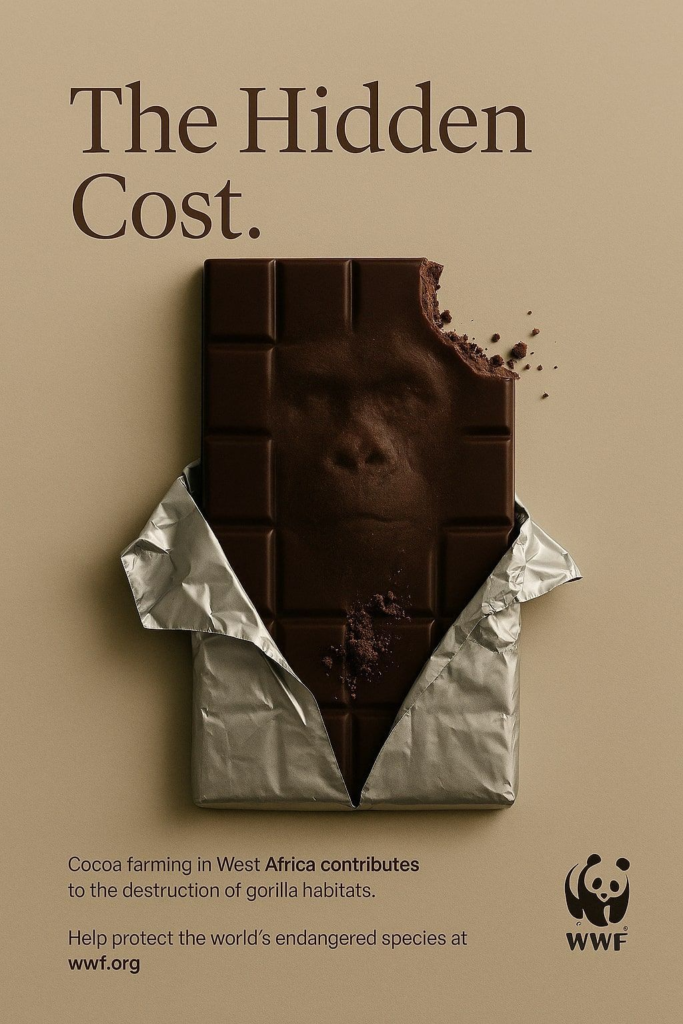
“The Hidden Cost” is a self-initiated campaign created by AI campaign developer Nikolaj Lykke Viborg, developed in collaboration with Birgit Winkel of WWF Denmark. The concept is precise: everyday consumer products carry invisible consequences for animal habitats, and most consumers have no idea.
Each of the 11 ads draws a direct visual connection between a product sitting on a supermarket shelf and the specific animal whose habitat is being destroyed to produce it. Cocoa powder arranged to form the face of a gorilla. A jaguar’s eyes staring out from inside a coffee cup. A turtle sealed inside a tuna can. A macaw caught in an avocado. Palm oil in instant noodles is mapped against the shrinking forests of Indochinese tigers. The campaign does not explain the connection in lengthy copy. It makes it impossible not to see.
The campaign line “The Hidden Cost” sits on each visual with deliberate restraint. There is no statistic, no call to action, no moralising addendum. The image carries the entire argument. Either you see it and feel something, or you do not. The campaign is designed to produce the former.
How It Was Made
Viborg developed the entire campaign inside ChatGPT using a custom-crafted master prompt built to produce the kind of visual storytelling typically associated with award-winning public service advertising. No post-production was applied. No subsequent editing of any image. What ChatGPT generated from the prompt became the final creative output, published as-is.
Viborg described the process directly: “I’ve tested how to use AI to create emotional and visually strong ads that could be reminiscent of something you’d see in a real campaign. Everything is done directly in ChatGPT without subsequent editing, from idea to image, with 100% focus on storytelling and visual impact. This is an example of how AI can be used creatively, not as a replacement for humans, but as a tool to quickly put important messages into play.”
The distinction he draws is the one the campaign has generated the most debate around. Not AI replacing humans. AI as a mechanism for removing the production barriers between an idea and its execution, specifically in contexts where the urgency of the message has always been more important than the budget available to communicate it.
Why It Spread
The LinkedIn post presenting the campaign generated hundreds of comments within 48 hours. The reaction divided along predictable lines. Creative industry professionals engaged with the production question: if a single person with a prompt can produce eleven campaign quality visuals without a studio, what does that mean for the workflow that typically produces them? Environmental advocates engaged with the content: the images are uncomfortable in the way effective advocacy always is, and the product-to-animal visual logic is immediate enough to stick.
What made the campaign spread across both communities is that it operates on two simultaneous frequencies. It is a conservation message that lands because the visuals are powerful enough to carry it. And it is a production case study that lands because the entire thing was built by one person in one tool with no external resources. The campaign proved two things at once, which is why it travelled so fast and so far.
The Larger Question It Raises
“The Hidden Cost” arrives at a moment when the advertising industry is actively debating the role of generative AI in creative production, a debate that is frequently abstract, positioned around hypothetical futures rather than demonstrated realities. This campaign is a demonstrated reality. The images exist. They were generated without a studio. They were endorsed by WWF Denmark and shared on their own platform. The debate is no longer hypothetical.
Viborg’s own framing of the production process is the most useful contribution to that debate. The argument is not that AI is better than human creative direction. It is that AI removes the production gap between the moment of a good idea and its execution, particularly in advocacy contexts where that gap has historically swallowed campaigns that deserved to exist.
Campaign Name: The Hidden Cost
Agency Name: Not mentioned (self-initiated by Nikolaj Lykke Viborg in collaboration with WWF Denmark)
Brand Name: WWF Denmark
Location: Denmark (global digital distribution via LinkedIn)